OKRs fail when the team can’t execute what it’s being asked to do. The goal itself is rarely the weak point. A goal is a bet on the team’s capability, and most organizations place that bet before they’ve checked whether the team can cover it.
Key Takeaways
- An OKR is a bet on team capability. Set one the team can't execute, and it fails while the framework takes the blame.
- You decide next quarter's results at the hiring stage, months before it starts. Every hire closes the goal-to-team gap or widens it.
- Cutting bait fast cuts both ways, on a bad hire or a bad fit, and doing it early is the whole point.
- Reality check: firing fast feels brutal, so managers wait. But the slow no costs more, even when it never feels that way.
The goal belongs at the end of the sequence
Most organizations run the quarter backwards. Leadership picks the number first, aggressive and round and ready to show the board. Then everyone goes looking for a way to hit it. The goal gets locked in before anyone asks the one question that decides whether it’s reachable: can this team do the work?
That’s the ordering error, and it’s everywhere. A goal is a bet on the people who have to deliver it. Place the bet before you know the hand, and you’re gambling. Calling it rigor doesn’t change what it is.
McKinsey studied exactly this. Across more than 400 companies, the firm found the widest gap between the ones that climbed and the ones that sank showed up in mobilization, its word for turning a chosen strategy into organizational readiness (1. McKinsey, 2025). Execution decided who won, more than the quality of the goal itself.
Start with what the team can do today
If capability decides the outcome, capability is where planning starts. That means an honest read of the team you have before the number goes on the board. What can they ship without heroics? Where do they stall? Which roles carry the real work, and which are titles on an org chart?
Make it concrete. Say the OKR is to lift conversion through on-site personalization : behavioral targeting, audience segments, content variants served by visitor profile. Your DXP does all of it, and that capability was a headline reason you signed with Sitecore or Optimizely. Now look at the team. Has anyone built a personalization rule? Defined a single audience? If the honest answer is no, the goal is fiction. The software can do the work. The team hasn’t been staffed or trained to run it.
Most leaders skip this because the answer is uncomfortable. It’s easier to write a bold OKR than to admit the team can’t hit a modest one. The OKR doesn’t care how you feel about it. It gets missed anyway, and then you run the honest assessment in a post-mortem instead of a planning session, at 10 times the cost.
You decide the quarter at the hire
Most goal-setting frameworks leave this part out. Next quarter’s results are mostly decided months earlier, at the hiring stage. Every hire either closes the gap between the goal and the team or widens it.
So you hire for the real gap you have, which is often not the most impressive résumé in the stack. Mike Rizzo, who runs the MarketingOps.com community and its annual State of the Marketing Operations Professional survey, gives the hiring advice he says he wishes someone had drilled into him: “hire for process thinking, not platform expertise” (2. Rizzo, 2024). The person who knows how one more tool works is worth less than the person who can build the system that makes the goal reachable. Hire the second one.
Cut bait fast, and do it early
The same logic runs in reverse. When a hire isn’t working, the goal is dying a little every week you wait, and the cost of waiting is real even though it never shows up on a dashboard as cleanly as a missed number does.
Failing fast cuts both ways, and that’s the part people flinch at. Sometimes the person is wrong for the seat. Sometimes the seat is wrong for the person, and the honest move is to say so early and let them go find the work they’re good at. Either way, the expensive choice is the slow one. Managers avoid the fast no because it feels brutal in the moment. The slow no feels like patience, right up until the quarter you bet on it is already gone.
Rizzo’s line for teams that run well captures the discipline. They “win because they know which fires to let burn” (2. Rizzo, 2024). Same skill, pointed at people instead of projects. You decide which problems to fix and which to end.
The AI frenzy didn’t change the order, it shortened the clock
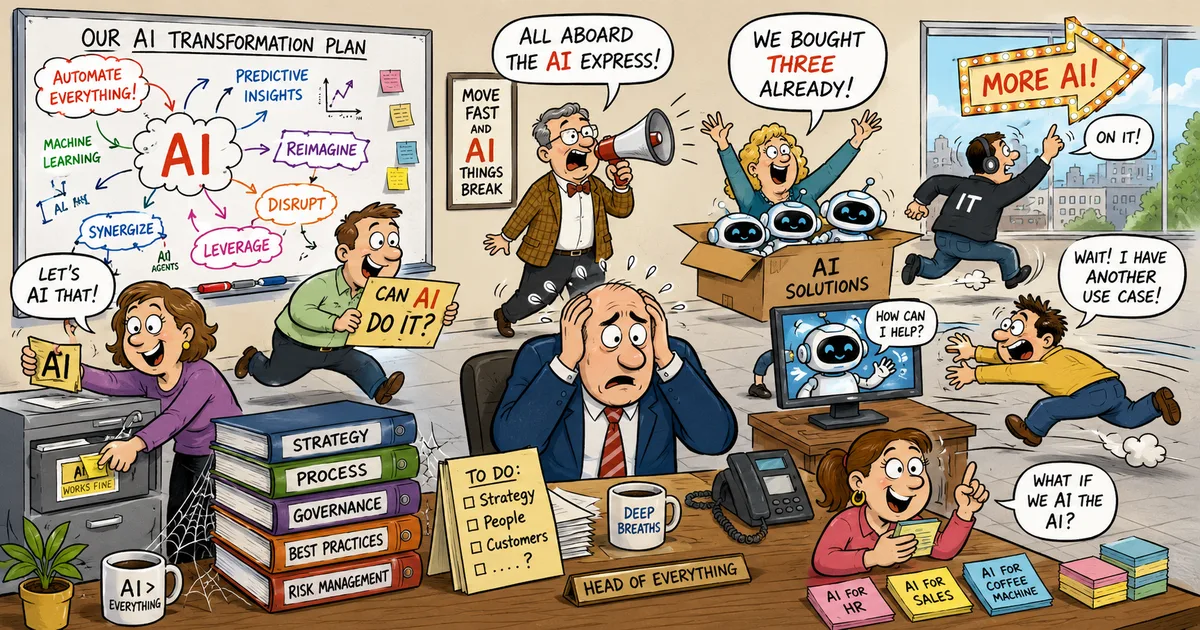
The problem is old. The pressure is new, and it keeps climbing. Every org is now writing goals with “AI” stapled to the front, and the distance between the ambition and what the team can execute has never been wider or easier to see. OKRs work the way they always have. What the frenzy did was strip out the slack that used to hide a capability gap for a few quarters before anyone noticed.
So the sequence matters more now than it used to. Read the team honestly. Hire for the gap. Cut bait early, both directions. Then set a goal the team can reach, and watch it hold. Run it in the other order, and the AI-era OKR becomes what it has quietly been for years: a number on a slide that the team was never built to hit.
Frequently Asked Questions
Why do OKRs fail even when the goals are well written?
Are OKRs still useful, or should we drop them?
What does cutting bait fast mean for a manager?
References
- McKinsey & Company. (2025). How strategy champions win. McKinsey Quarterly. https://www.mckinsey.com/capabilities/strategy-and-corporate-finance/our-insights/how-strategy-champions-win
- Rizzo, M. (2024). What makes a high-performing marketing ops team? MarketingOps.com. https://mopscom.substack.com/p/building-and-leading-high-performing