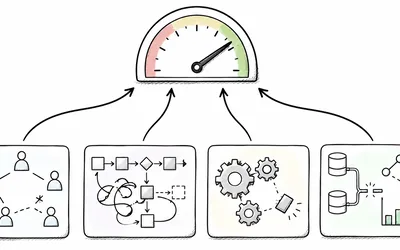
Start with your team and conditions, not the platform. When martech underdelivers, a new tool rarely fixes it, and where you start depends on your situation, from product-market fit to your team’s capability.
Key Takeaways
- Martech that underdelivers is usually a team and conditions problem, not a platform problem, so a new tool rarely fixes it.
- The right starting point depends on your situation: product-market fit, political conditions, in-house capability, alignment, or your team.
- Swapping platforms carries the same problems to the next vendor; the conditions around the tool decide whether it pays off.
- A free, anonymous tool points you to one starting place. It routes, it doesn't diagnose.
When your martech isn’t delivering, the instinct is to go shopping. New platform, better tool, the feature the last one was missing. That instinct usually misfires. Most of the time the stack is fine and the problem sits upstream: unclear goals, data nobody trusts, a team that was never set up to run what you already bought. So the first move is finding where to start fixing it, before you spend on a new tool. This piece lays out the five most common starting points, and a tool that reads your answers and points you to yours.
Why a new tool rarely fixes martech that isn’t delivering
Marketing technology mostly fails for reasons that have nothing to do with the software. The goals were never sharp enough to build against. The data moving between systems was never clean. Nobody owned the outcome, or the team running the stack was never trained on half of what it does. Swap the platform and every one of those problems follows you to the next vendor.
Teams, not platforms, decide how a stack performs. So the useful question is what has to be true for any tool to pay off, and which of those things you’re missing.
The five places to start
Ask a room of leaders where their martech went wrong and you get different answers, because they’re starting from different places. There are five, and which one is yours depends on where you sit right now:
- You haven’t found product-market fit yet. Solve that first. Until the business model holds still, any martech plan you build keeps changing under you.
- The conditions aren’t safe for an honest look. If a real review would get softened or buried before it reached anyone who could act on it, that’s the first thing to fix, ahead of any tool or process.
- No one inside has run this kind of review before. Bring in outside help, hired to leave your team able to run the next round without them.
- Your goals, strategy, and customer experience aren’t sharp enough to measure a tool against. Get those aligned first, or every later finding floats free of the goals it’s supposed to serve.
- Everything above is workable. Then you start with your team: what they can run, how they work, and only then whether the tool is what’s holding you back.
What the tool does, and what it doesn’t
The tool gives you one starting point and the reason your answers pointed there. That’s all it does. Sixteen questions can’t diagnose a stack, and any tool that claims it can is lying. Real diagnosis is slower work, and the full method for doing it right is in my book, Marketing Technology Transformation® .
Your answers stay private and if you decide to get in touch, that conversation is kept separate from how you answered. The tool is free, anonymous, and takes about five minutes: find where to start .
Frequently Asked Questions
Why won't a new platform fix martech that isn't delivering?
Where should I start if my martech isn't delivering?
Is martech underperformance a technology problem or a team problem?
References
- De Libero, Gene. (2026). Marketing Technology Transformation®: Why Teams, Not Platforms, Determine Martech Stack Performance. https://marketingtechnologytransformation.com