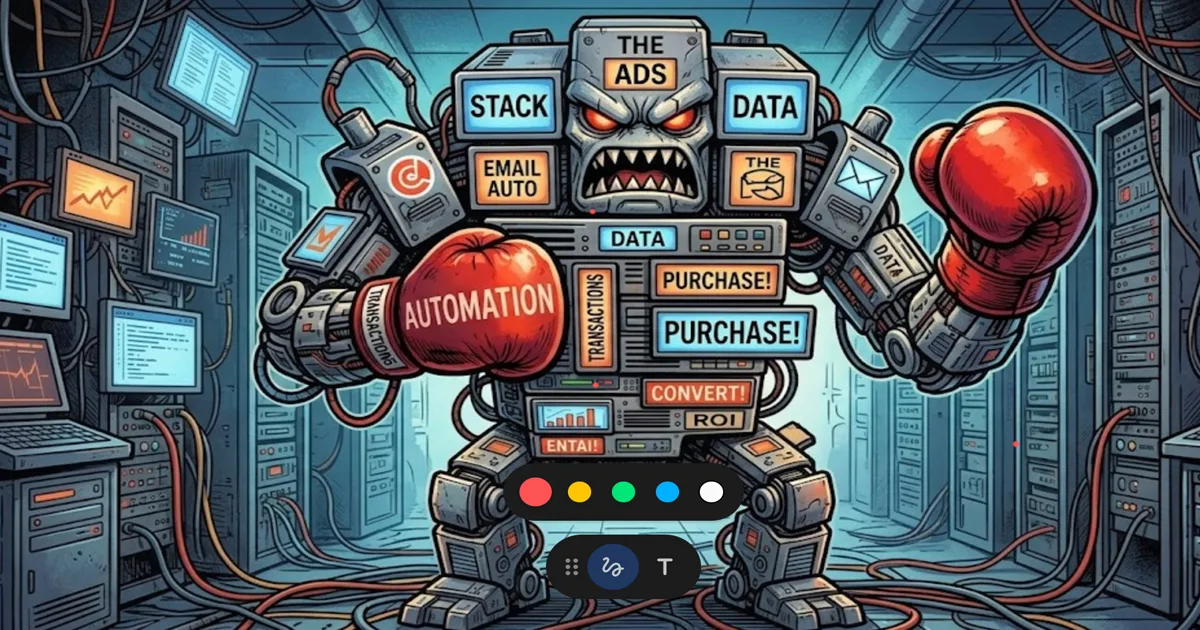
Your marketing stack was built to process transactions, and it’s quietly training your team to treat every customer interaction as a pipeline event instead of a relationship touchpoint. The architecture of your systems determines what your team optimizes for, regardless of what your strategy documents say.
Key Takeaways
- Marketing teams default to transaction metrics because their systems only surface transaction data.
- Poor customer experiences put nearly $3 trillion in global sales at risk annually.
- Shifting to relationship metrics requires measurement redesign, not new dashboards.
- Relationship-first systems demand cross-functional agreement your team probably doesn't have yet.
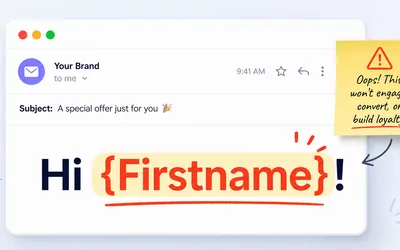
Your most loyal customer just opened a support ticket. They’ve been with you for 5 years, expanded their account every renewal cycle, and advocate for you at industry events. Your marketing automation doesn’t know any of that. It fired a “Why haven’t you tried our premium features?” email because the campaign rules triggered on a behavior score, not a relationship.
That disconnect reveals which of two operating models your stack is built for. Both models exist for reasons. The question is whether you chose yours deliberately or inherited it from the defaults your platforms shipped with.
The Transaction-First Model
Open your marketing dashboards. The top metrics across marketing organizations tell the story: 40% of marketers report lead quality and MQLs as their most important success metric, followed by lead-to-customer conversion, ROI, customer acquisition cost, and lead generation volume (1. HubSpot, 2026). Every one of those is a transaction metric. Customer health, relationship depth, advocacy signals, expansion readiness: none crack the top 5.
Transaction-first is the dominant model because it has real strengths. Measurement is clear. Feedback loops are short. Executives see numbers they understand. Procurement can compare platforms on conversion features. When systems surface pipeline data, teams optimize for pipeline events. The incentive structure is coherent from vendor to buyer to operator.
For high-volume businesses with low switching costs and short sales cycles, this model works. It’s measurable, reportable, and aligned with how most organizations evaluate marketing performance.
What it costs becomes visible at scale. Poor customer experiences put nearly $3 trillion in global sales at risk annually, according to research across 20,000 consumers in 14 countries. When consumers encounter a bad experience, 34% reduce what they spend with a company, and 13% stop entirely (2. Qualtrics XM Institute, 2025). Context-ignorant automation manufactures those bad experiences systematically. Customers consistently report that irrelevant messaging is the primary driver of email fatigue and brand disengagement (4. Optimove, 2025).
The cost isn’t that the transaction model is wrong. The cost is that optimizing for transactions without context erodes the revenue you’ve already earned. Every promotional email sent to a customer mid-support-ticket isn’t a neutral event. It’s an active withdrawal from a relationship account that took years to build. The model doesn’t account for that withdrawal because the model doesn’t see relationships. It sees pipeline stages.
The Relationship-First Model
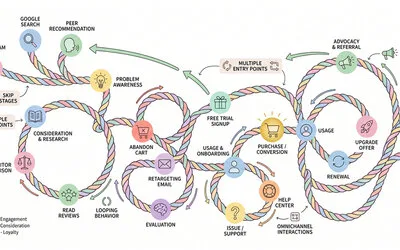
Relationship-first optimizes for different outcomes: customer context, retention economics, expansion readiness, lifetime value. The system of record tracks relationship state, not deal state alone. When a customer contacts support, the sales team sees that context before their next outreach. If product usage drops, marketing pauses the upsell sequence instead of intensifying it.
Research correlating specific technologies with net revenue retention found that missing CRM connectivity has the greatest negative impact on NRR, followed by gaps in customer success platforms (5. ChurnZero, 2026). Companies with connected customer operations see stronger renewal and expansion outcomes. The business case is retention economics: keeping revenue you already earned costs less than replacing it.
What this model costs is organizational, not technical. Among organizations struggling with data quality, 79% lack a standard definition of what “good data” even means across departments (3. Openprise/RevOps Co-op, 2025). If your teams can’t agree on what a clean record looks like, they won’t agree on what a healthy customer relationship looks like either. Customer context has to flow between marketing, sales, support, and success. That requires shared definitions, connected systems, and governance nobody owns yet.
Relationship metrics are harder to report. Feedback loops are longer. Cross-functional agreement on definitions is a prerequisite your organization probably doesn’t have. That agreement is the measurement contract most analytics teams never signed . The cost isn’t that the model is idealistic. The cost is that organizational readiness determines whether you can execute it, and most organizations aren’t ready.
The Choice Is Deliberate or It’s Default
Most stacks default to transaction-first because that’s what the market ships and procurement rewards. Nobody chose it. The platforms arrived configured for pipeline stages, and the team learned to optimize for what the dashboards surfaced. Within a few quarters, nobody remembered that the metrics were a design choice. They felt like the only reality.
Relationship-first isn’t an upgrade you apply to a transaction-first stack. It’s a different operating model with different costs, different timelines, and different organizational prerequisites. You don’t need a new platform. You need to decide that customer context travels with the customer across every system, and then build the governance to make that real.
The question isn’t which model is better. The question is which model you chose, and whether that choice still serves what your business needs. Start with what you can see: audit your automation for context-blind moments. Upsell sequences targeting accounts with declining usage. Promotional campaigns hitting customers with open escalations. Onboarding emails going to accounts that finished onboarding months ago. Each one tells you where your transaction-first default is actively damaging relationships your team spent years building.
Frequently Asked Questions
Why do marketing teams focus on transactions instead of relationships?
Can you build relationship marketing on existing technology?
What's the business case for relationship-first metrics?
How do you get executive buy-in for relationship metrics?
What's the first step toward fixing transaction-first systems?
References
- HubSpot. (2026). State of Marketing Report 2026. HubSpot Research. https://www.hubspot.com/marketing-statistics
- Qualtrics XM Institute. (2025). $3 Trillion is at Risk due to Bad Customer Experiences in 2026. Qualtrics. https://www.qualtrics.com/articles/customer-experience/3-trillion-risk-due-bad-customer-experiences-2026/
- Openprise, RevOps Co-op, & MarketingOps. (2025). The 2025 State of RevOps Survey: Data Quality’s Impact on GTM Execution. Openprise.
- Optimove. (2025). 2025 Consumer Marketing Fatigue Report. Optimove Insights. https://www.optimove.com/resources/reports/2025-optimove-insights-consumer-marketing-fatigue-full-report
- ChurnZero. (2026). The 10 Customer Growth Trends to Know for 2026. ChurnZero. https://churnzero.com/blog/customer-growth-trends-tips-2026/