Organizations that consistently deliver remarkable customer experiences share a pattern: they design from the customer’s world inward, not from their technology stack outward. The playbook starts with moments worth sharing, runs through culture-to-outcome alignment, and requires leadership willing to do the work that no vendor can sell.
Key Takeaways
- Remarkable CX starts by designing moments customers want to share, not by optimizing conversion funnels with more technology.
- Culture drives customer experience. If employees don't feel the mission, customers won't either.
- Most connected-experience failures trace back to operating model dysfunction, not platform gaps.
- None of these strategies require a new platform purchase. All of them require harder work than buying one.
The Question Personalization Left on the Table
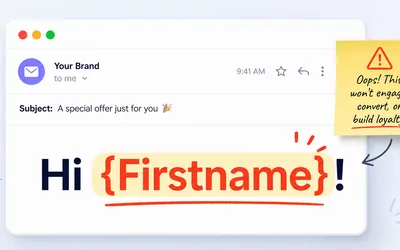
The case against personalization -as-strategy is well-documented at this point . Billions spent. Marginal returns. A growing body of evidence that the biggest investments in marketing technology aren’t producing proportional customer outcomes.
Tearing something down creates an obligation: what works instead?
The answer isn’t another framework dressed up as a product pitch. It’s a set of disciplines that three CX practitioners have been refining in different lanes, all pointing at the same conclusion. Remarkable customer experience is designed from the outside in. And the hardest parts of it can’t be purchased.
Design Moments Worth Sharing
Dan Gingiss spent years studying why certain customer experiences get talked about and others don’t. He built the WISER framework around five qualities that make experiences remarkable: Witty, Immersive, Shareable, Extraordinary, or Responsive. Experiences carrying at least one create organic advocacy that no ad budget can replicate (1. Gingiss, 2025).
Most organizations pour resources into acquiring new customers while ignoring the experience of the ones they already have. Gingiss calls it a leaky bucket. You can keep filling it, or you can fix the holes.
The fixes are about attention, not new platforms. A handwritten note in a shipping box. A support interaction that resolves the problem and makes the customer laugh. An onboarding sequence designed around what the customer needs to feel, not what the CRM needs to capture.
Touchpoint optimization asks how to make an existing channel perform better. That’s inside-out. Moment design starts somewhere else entirely: what would make this person tell someone about us tomorrow?
Fix the Thread That Connects Culture to Outcomes
Annette Franz has spent two decades helping organizations untangle why their CX programs produce dashboards instead of outcomes. She maps a direct line from organizational culture through employee experience to customer results. She calls it the Golden Thread: culture shapes employee experience, employee experience shapes customer outcomes. When that thread breaks, no amount of technology reconnects it (2. CX Network, 2026).
Franz’s argument hits a nerve because it names what most CX programs skip: the employee layer. Companies invest in journey mapping and voice-of-customer programs while ignoring the experience of the people delivering the experience. That disconnect shows. Customers feel it in every interaction that follows a script instead of solving a problem.
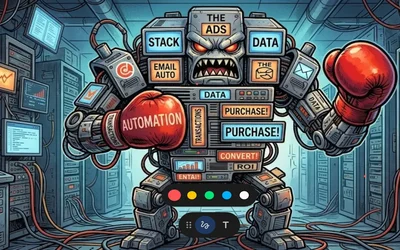
This maps directly to a pattern I see in martech transformations. Organizations keep buying platforms to connect customer experiences, but the failures don’t trace back to platform gaps. They trace back to operating model dysfunction. The customer journey has no single owner. Teams optimize their own KPIs instead of the ones they can only hit together. The technology connects fine. The organization doesn’t (3. De Libero, 2026).
The fix isn’t a better integration layer. It’s deciding that customer experience is an organizational discipline, not a marketing function.
Lead from the Customer’s World
Steven Van Belleghem studies what happens when companies get the human-technology balance right — and what breaks when they don’t. His argument: technology handles the transaction, but humans provide the magic. The organizations that win will be the ones where that division of labor is intentional, not accidental (4. Van Belleghem, 2025).
He points to Hubert Joly’s turnaround of Best Buy as the model. Joly wore a badge that read “CEO in Training” and spent his first weeks working the floor. It restructured how leadership understood the customer’s world. Not because the gesture was symbolic, but because every conversation on the sales floor surfaced something the executive suite had missed.
That’s the uncomfortable part of outside-in CX . It demands that leaders experience what their customers experience. Not through dashboards. Not through quarterly NPS reports. Through the kind of proximity that makes abstract metrics personal.
Make every executive spend one day per quarter working a customer-facing role. The insights that surface in those eight hours will reshape priorities faster than any quarterly analytics review, because the executive felt them instead of reading them.
The Uncomfortable Work
The organizations that deliver remarkable customer experiences won’t be the ones with the biggest technology budgets. They’ll be the ones willing to do the work no vendor can deliver: designing moments worth talking about, aligning culture to outcomes, and leading from the customer’s world instead of the boardroom.
Every strategy here is available today. None of them show up on a vendor capabilities matrix. All of them are harder than buying a platform.
That’s exactly why they work.
Frequently Asked Questions
What is outside-in CX design?
What is the WISER framework for customer experience?
How does organizational culture affect customer experience?
Why do connected customer experience initiatives keep failing?
Can organizations improve CX without purchasing new technology?
Why is trust becoming a CX differentiator?
References
- Gingiss, D. (2025). Becoming The Experience Maker: How to Create Remarkable Experiences That Your Customers Can’t Wait to Share (2nd ed.). Morgan James Publishing.
- CX Network. (2026). 12 things your next CX strategy needs to cover: CX strategy tips for 2026. CX Network. https://www.cxnetwork.com/cx-experience/articles/cx-strategy-tips-2026
- De Libero, G. (2026, March 16). Why connected customer experiences keep failing — and what actually works. MarTech.org. https://martech.org/why-connected-customer-experiences-keep-failing-and-what-actually-works/
- Van Belleghem, S. (2025). The 5 hottest CX trends for 2025. Steven Van Belleghem. https://www.stevenvanbelleghem.com/blog/the-5-hottest-cx-trends-for-2025