The martech implementation gap is the distance between what a vendor demo shows you and the work that makes the tool perform: integration, data cleanup, governance, and adoption. That work never disappears. The demo hides it, and it lands on your team after you sign, usually unpriced.
Key Takeaways
- A martech demo shows the finished result and hides the work that produces it. That hidden work becomes your cost, not the vendor's.
- Most software regret traces to what the demo skipped, integration, data, and adoption, not the feature you bought.
- AI demos hide more of the process, not less. A prompt-to-campaign clip erases the integration where value dies.
- Reality check: you can't price the hidden work by watching a better demo. You price it by diagnosing your own stack first.
The video erased the factory
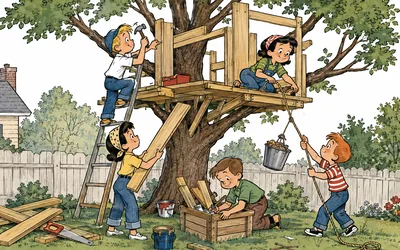
A video making the rounds shows a banana stem going into a machine. A few seconds later, finished jeans come out the other end. The banana fiber is real. Factories really do spin banana stalks into denim. The factory in the clip is not real. As Leonardo Freixas put it, the fiber is real, the factory is not (1. Freixas, 2026).
The video didn’t fake the product. It hid the process. The extraction, cleaning, drying, combing, spinning, weaving, dyeing, cutting, and assembly that turn a stalk into a garment all got cut. Erase those steps and the economics stop making sense. People watched the clip and started arguing about jobs, automation, and factory costs as if they’d seen manufacturing. They’d seen an edit.
A martech demo does the same thing to you. And you make a purchase decision on the edit.
Here’s the belief worth killing: that the work a demo skips is the vendor’s problem to solve. It isn’t. It’s yours, and nobody put a price on it.
Where the erased work actually goes
Everyone can recite why tools fail after purchase. Bought in a silo. No owner. Weak training. Broken integrations. All true, and all downstream of the one thing the demo removed: the middle.
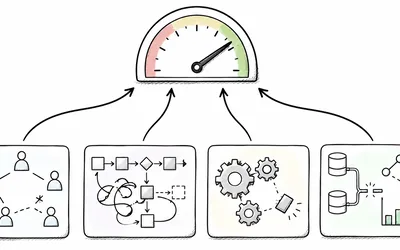
Your CDP demo shows a clean, unified customer profile and a segment firing into an email the moment someone hits a page. What it skips is the eight weeks of identity resolution behind that profile, the source systems that don’t agree on what a “customer” even is, the consent flags nobody mapped, and the person who now owns data quality forever. The segment in the demo was real. So was the fiber. The factory that produces it just moved to your side of the contract.
That skipped work is where the money goes. Gartner’s 2025 software buying research found that 59% of buyers regret at least one software purchase from the past 18 months, with marketing and communications among the highest-regret categories (2. Gartner, 2025). Read the reasons and they’re consistent: unexpected cost, slow implementation, adoption that never landed. Buyers don’t regret the feature they watched. They regret the cost of the work the feature needed, which showed up after the signature and never appeared in the quote.
AI doesn’t shrink the middle, it hides it better
The newer demo is worse, because it looks like even more of the work is gone. An agent takes a prompt and returns a finished campaign in a single clip. Prompt in, campaign out, no middle visible at all. It’s the banana video with a bigger budget.
MIT’s 2025 study of enterprise AI found that roughly 95% of generative AI initiatives delivered no measurable return, and the authors were specific about the cause. The failure wasn’t model quality. It was integration, the tool’s inability to learn a company’s actual workflows and connect to its real data (3. Challapally et al., 2025). The demo shows you the model. The model was never the hard part. The middle is, and an agent hides it more completely than a dashboard ever could. What looks like the work disappearing is just the work moving somewhere you can’t see it until you own it.
The demo isn’t the villain
None of this makes demos useless or vendors dishonest. A good demo shows you a product can do the thing, and buying usually beats building. That same MIT research found companies that bought from specialized vendors succeeded far more often than the ones that tried to build their own (3. Challapally et al., 2025). So the mistake isn’t watching the demo or trusting the vendor. It’s treating the demo as evidence about your outcome, when the most it can honestly show you is the vendor’s. Your outcome lives in the middle the demo left out, and that part is yours to scope whether the tool is bought or built.
Price the middle before you buy
You can’t close the martech implementation gap by watching a better demo. The information you need isn’t in the vendor’s clip. It’s in your own stack. Before you buy or replace anything, build your own evaluation and price the middle:
- What has to integrate, and who has actually confirmed it will?
- Whose data feeds this, and do those systems agree with each other today?
- Who owns it after launch, and is that a real, named person with time on their calendar?
- What has to change in how the team works, and who’s driving that change?
If you can’t answer those, the demo told you nothing about your outcome. It told you about the vendor’s edit. Diagnosing your own middle first is also how the buy, optimize, or leave-it-alone question mostly answers itself, because most of what makes a tool succeed or fail is sitting in your stack, not in theirs.
Frequently Asked Questions
What is the martech implementation gap?
Why do so many martech purchases end in regret?
Does AI reduce the martech implementation gap?
References
- Freixas, L. (2026). The banana fiber is real. The factory is not. LinkedIn. https://www.linkedin.com/posts/leonardo-freixas_the-banana-fiber-is-real-the-factory-is-ugcPost-7491076645919948800-X7TJ/
- Gartner Digital Markets. (2025). 2025 software buying trends. Gartner. https://www.gartner.com/en/digital-markets/insights/2025-software-buying-trends
- Challapally, A., Pease, C., Raskar, R., & Chari, P. (2025). The GenAI divide: State of AI in business 2025. MIT NANDA. https://mlq.ai/media/quarterly_decks/v0.1_State_of_AI_in_Business_2025_Report.pdf