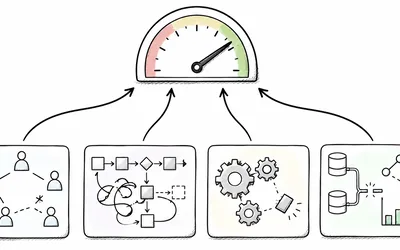
Low martech platform utilization isn’t one problem. It’s two. It either signals a capability gap requiring investment or a rightsizing opportunity requiring divestment, and the industry’s refusal to distinguish between them makes the metric useless.
Key Takeaways
- A utilization rate tells you nothing actionable until you determine whether unused features represent capabilities you need but haven't activated or capabilities that were never relevant to your business.
- The capability gap direction demands investment in enablement, process redesign, and organizational readiness. That's the work most organizations skip when buying technology.
- The rightsizing direction demands honest procurement decisions. Stop paying for platform complexity your business doesn't need and won't grow into.
- Most organizations avoid the diagnostic work to tell these apart because it forces accountability conversations that neither vendors nor internal stakeholders want to have.
The Myth: Utilization Is a Diagnosis
“Our utilization is low” has become the universal martech complaint. It shows up in vendor QBRs, in consulting assessments, in executive reviews of marketing technology ROI. And the response is almost always the same: training programs, adoption campaigns, change management workshops, sometimes even replacing team members in hopes that new hires will bring the right skillset. All designed to push the number up.
Here’s what that response gets wrong: “low utilization” describes 2 completely different conditions sharing the same label.
A marketing automation platform running at 30% utilization could mean the team needs that platform’s full capability set but lacks the skills, processes, or organizational support to activate it. Or it could mean 70% of those features were never relevant to how the organization operates. Someone bought a platform built for a business model that doesn’t match.
One condition requires investment. The other requires divestment. The martech industry has built an entire vocabulary around treating them as interchangeable.
The Capability Gap Direction
When unused features represent genuine capability your organization needs, the utilization gap is an organizational problem masquerading as a technology metric .
Consider how this plays out. An organization invests in a marketing automation platform with behavioral scoring, multi-touch attribution, and predictive analytics . 18 months later, they’re using it to send batch emails. The features exist. The licenses are paid. But the team doesn’t have the analytical skills to build scoring models, the data infrastructure to feed attribution, or the cross-functional authority to act on predictive signals.
Training budgets tell part of the story. The CMO Survey reports that marketing training expenditure sits at 3.8% of marketing budgets, with the fundamental approach to capability development essentially unchanged since 2020 [1]. Organizations keep buying platforms that assume capabilities their teams don’t have, then measuring the gap as a “utilization problem.”
Deloitte’s 2026 Global Human Capital Trends research reinforces the pattern beyond martech: 59% of organizations take a technology-focused approach to capability adoption, and those organizations are 1.6 times more likely to fail to realize expected returns compared to those investing in human capabilities alongside the technology [2]. Invest in the tool, underinvest in the people and processes required to use it, then blame the tool’s complexity when adoption stalls. The pattern is a decade old in martech. It has better data now.
The capability gap direction demands a specific response: enablement investment, process redesign, and organizational readiness work. Training alone falls short when the issue is structural. The team lacks decision authority. Data flows don’t support the feature. The organizational design puts the capability in the wrong hands.
The Rightsizing Direction
When unused features represent capabilities your organization was never going to use, the utilization gap is a procurement problem masquerading as an adoption failure.
Nobody wants to name this one. Vendors don’t want to hear that their customer bought too much platform. Internal champions don’t want to admit they oversold the business case. Consultants who recommended the platform don’t want to revisit the requirements analysis. So everyone defaults to “we need better adoption” when the honest answer is “we bought capabilities we don’t need, or could never use in our current state.”
The ANA’s 2026 research on organizational readiness found that the primary barriers to martech effectiveness are organizational, not technological [3]. Data silos , weak cross-functional collaboration, and limited operational bandwidth. When the barriers are organizational and the response is buying more capable technology, the utilization denominator grows while the numerator stays flat. That’s a procurement problem, not an adoption problem.
The rightsizing direction demands a different response entirely: audit the feature set against actual operational needs, identify what you’re paying for that doesn’t serve a current or near-term business requirement, and make honest decisions about whether to downgrade, renegotiate, or replace.
Why Nobody Asks Which One It Is
Telling these apart takes real diagnostic work. It also threatens every stakeholder’s position, which is why the work rarely happens.
Vendors prefer the capability gap framing because it leads to training services, professional services, and expanded implementation scope. All additional revenue on the existing contract. Rightsizing conversations lead to downgrades and churn.
For consultants and agencies, the incentive runs the same direction. Capability gap work generates ongoing engagement: assessments, roadmaps, enablement programs, change management. Rightsizing generates a single recommendation that shrinks the account.
Internal teams have their own version of the same calculus. The capability gap framing turns low utilization into a resource argument (“we need more budget, more headcount, more training”). That’s easier to defend upward than the accountability version (“we bought the wrong thing”).
So the consensus holds: every utilization gap gets framed as an adoption challenge. Nobody asks the diagnostic question (is this a feature we need but can’t use, or a feature we never needed?) because nobody in the room benefits from the answer.
The Fork, Not the Fix
Utilization becomes useful when you stop treating it as a diagnosis and start treating it as a fork.
For every feature cluster sitting below your activation threshold, ask 2 questions. First: if we had the right skills, processes, and organizational support, would this feature advance a business outcome we’re pursuing? If yes, you’re facing a capability gap, and the investment case is in enablement, not replacement. Second: does this feature serve a business model, audience segment, or operational workflow that doesn’t describe how your organization operates? If yes, you’re facing a rightsizing opportunity, and the investment case is in simplification.
A 3rd category exists: features you’re deliberately growing into on a defined timeline. That’s neither a capability gap nor a rightsizing opportunity. It’s a strategic bet. The test is whether you can name which features fall in that bucket and when you expect to activate them. If you can’t articulate the timeline, it’s not headroom. It’s hope dressed up as strategy. (We dig into that test in “Your Vendor Says You’ll Need It Later. Here’s How to Know.”)
Most organizations will find both directions present in the same platform. Some underused features are genuine capability gaps. Others are irrelevant complexity. The single utilization number hides the ratio between them, and that ratio determines whether your next move is to invest more or spend less.
Until you know which direction you’re facing, the utilization number is a number.
Frequently Asked Questions
How do you calculate feature utilization?
What's a good feature utilization rate?
How do organizations typically try to improve feature utilization?
References
- Moorman, C. (2026). The CMO Survey, 35th Edition, Spring 2026. Duke University Fuqua School of Business / Deloitte / AMA. https://cmosurvey.org
- Poynton, S., Flynn, J., Scoble-Williams, N., Reyes, V., Mallon, D., & Cantrell, S. (2026). 2026 Global Human Capital Trends: From tensions to tipping points. Deloitte Insights. https://www.deloitte.com/us/en/insights/topics/talent/human-capital-trends.html
- Heuer, C. (2026). Why martech success in 2026 depends on organizational readiness, not technology. ANA. https://www.ana.net/miccontent/show/id/ii-2026-02-martech-organizational-readiness