Switching costs are the total financial, operational, and organizational costs an organization incurs when replacing one technology vendor or platform with another.
Switching costs are the full expense of moving off one platform onto another, covering the license, the migration work, the retraining, and the output lost around cutover.
The licensing cost of the new tool is the number everyone focuses on. It’s also the smallest part of the actual expense.
Switching costs break into 3 categories, and only the first one shows up in a procurement spreadsheet. Direct costs are the line items: new license fees, implementation services, data migration, integration rebuilds. Operational costs are the disruption: retraining teams, rebuilding reports, reconfiguring workflows, and the productivity drop while people learn a new interface. Institutional costs are the hardest to quantify: the accumulated knowledge about how the old platform behaved (including its quirks and workarounds) that walks out the door the moment you cut over.
Most vendor-change business cases undercount by 40 to 60 percent because they model direct costs and estimate operational costs but ignore institutional costs entirely. The team that spent 3 years learning that the old platform’s lead scoring needed a specific field mapping to produce accurate results has to relearn equivalent quirks in the new system. That learning curve has a real cost in missed leads, bad routing, and frustrated sales teams.
The practical implication: switching costs aren’t a reason to never switch. They’re a reason to build switching cost awareness into the original purchase decision. What will it cost to leave this vendor in 3 years? If nobody can answer that question during procurement, the organization is making a commitment it doesn’t understand.
Frequently Asked Questions
What are the biggest hidden switching costs in martech?
How do you estimate switching costs before making a vendor change?
Go deeper

The Real Warning Signs of Martech Vendor Dependency Are in Your Team, Not Your Contract
The real warning signs of martech vendor dependency aren't in the contract. They're in your operating model, and they show up a year before the stack fails.
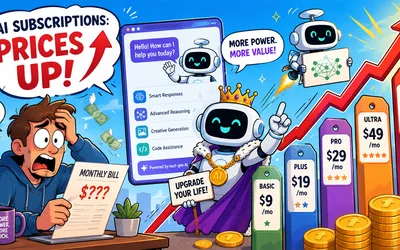
Everyone's Got to Get Paid: Why AI Pricing Isn't the Threat You Think It Is
AI pricing increases follow the same penetration pricing playbook as Netflix, Adobe, and Uber. The real risk isn't the cost. It's whether your organization is built to use AI at all.