Penetration pricing is a market entry strategy where a company sets prices below sustainable levels to capture market share, build switching costs, and establish dominance before raising prices to extract value from a locked-in customer base.
Penetration pricing follows a three-stage arc. A company enters a competitive market by pricing below what customers expect to pay, often below the company’s own cost to deliver. The low price captures market share. As customers integrate the product into their workflows, switching costs accumulate. Once the customer base is large enough and dependent enough, prices rise toward sustainable revenue targets. The company monetizes the lock-in it built during the subsidy phase.
The playbook running through AI and martech
Netflix launched streaming at $7.99 a month and now charges $24.99 for Premium. Adobe killed the $2,600 perpetual Creative Suite license and replaced it with subscriptions that now run $69.99 a month. Uber subsidized rides with venture capital until fares undercut taxis, then raised prices and multiplied fees. AI companies are running the same sequence: free tiers and below-cost token pricing funded by venture capital, followed by tier restructuring, usage-based billing, and restricted free access as investors demand returns on infrastructure spending.
The arc is predictable. The organizational risk compounds when companies adopt tools during the subsidy phase without building the data quality , governance, or problem definition required to generate value from them. When prices rise, organizations with strong foundations renegotiate from a position of demonstrated ROI . Organizations without that foundation discover they’ve been paying for capability they never activated, and the price increase forces a reckoning that the low introductory rate had been masking.
Frequently Asked Questions
Is penetration pricing the same as a freemium model?
How should organizations prepare for AI pricing increases?
Go deeper
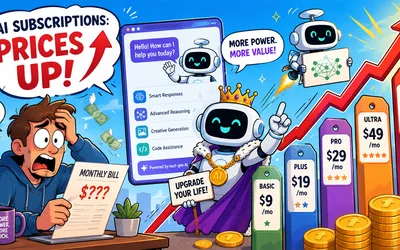
Everyone's Got to Get Paid: Why AI Pricing Isn't the Threat You Think It Is
AI pricing increases follow the same penetration pricing playbook as Netflix, Adobe, and Uber. The real risk isn't the cost. It's whether your organization is built to use AI at all.