A parallel run is a migration strategy where the legacy platform and replacement platform operate simultaneously. Used to validate the new system before decommissioning the old one, but the dual-platform period carries costs that migration budgets frequently underestimate.
In IT, a parallel run is a validation exercise. Run both systems on the same inputs, compare the outputs, confirm the new system works correctly, then cut over. Clean, methodical, time-boxed.
In martech, a parallel run is that plus an operational burden that migration plans routinely undercount. For the duration of the parallel period, two platforms need licensing , two systems need maintenance, two sets of integrations need monitoring, and the team splits its attention between operating the current environment and building the future one.
Where the budget math breaks
A vendor offering a free year on a new platform often calculates the customer’s cost of switching as the new license fee. The parallel run reveals the actual number. During the overlap period, the organization is paying for the legacy platform (which cannot be decommissioned until migration is complete), the new platform (even if the first year is free, implementation costs are not), and the people who have to keep both running.
Content migration, data synchronization between systems, and integration rewiring all happen during this window. If any of those workstreams fall behind schedule, the parallel run extends, and the costs compound.
Planning for the real timeline
Effective migration planning treats the parallel run as its own budget line, not as a footnote. It includes dual licensing costs, the operational overhead of maintaining two systems, the productivity loss from a team working across both environments, and a contingency for schedule extension. Organizations that plan for a 3-month parallel run and budget for 6 rarely regret the margin.
Frequently Asked Questions
How long does a parallel run typically last?
Can you avoid a parallel run entirely?
Go deeper
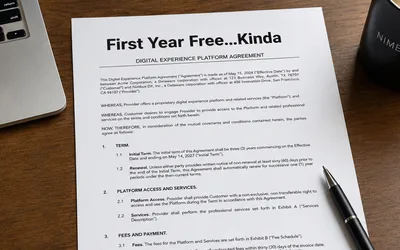
Free-Year Migration Offers: The Math Vendors Skip
Vendor 'free first year' migration offers bundled with multi-year contracts rarely pencil out against real timelines. Here's the math procurement skips.