An MQL is a lead that has met predefined criteria for both fit and engagement, indicating readiness for sales follow-up. The MQL threshold is the handoff point between marketing and sales in a demand generation process.
An MQL is a lead that has crossed a threshold jointly defined by marketing and sales. That threshold combines fit (does this person match the ideal customer profile ?) with engagement (have they demonstrated enough interest to warrant direct outreach?). When a lead hits the MQL threshold, it moves from marketing’s nurture programs into sales follow-up.
The mechanics vary. In most organizations, the threshold is a score generated by the marketing automation platform based on weighted actions: visiting the pricing page, downloading a case study, attending a webinar, matching on title and company size. The specific weights and thresholds are configured by marketing operations and validated by sales.
Solving the coordination problem
The MQL exists to solve a coordination problem. Without a shared definition, marketing sends every lead to sales (“here are 5,000 names from the webinar”), sales ignores most of them (“these are not real leads”), and both sides blame the other for pipeline shortfalls.
A well-defined MQL creates accountability in both directions. Marketing is responsible for delivering leads that meet the criteria. Sales is responsible for following up on them within an agreed SLA . When the definition is calibrated against actual conversion data, MQLs become a reliable pipeline predictor rather than a vanity metric.
The volume-quality tension
The most debated issue in demand generation is whether MQLs incentivize the wrong behavior. If marketing is measured on MQL volume, the scoring model can drift toward rewarding engagement quantity over buying intent. A lead who downloaded 6 ebooks scores higher than a decision-maker who visited the pricing page once. Volume goes up. Pipeline quality goes down.
The fix is not to abandon the metric. It is to close the feedback loop. Sales acceptance rates, SQL conversion rates, and closed-won data should feed back into the scoring model regularly. Without that loop, the MQL threshold drifts from “ready for sales” to “interacted with content,” and the metric loses its operational meaning.
Frequently Asked Questions
What is the difference between an MQL and an SQL?
Is the MQL outdated?
Go deeper
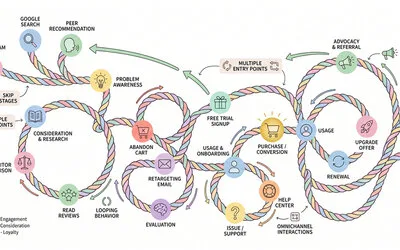
Stop Configuring Your Martech Stack for Buyers Who No Longer Exist
Your martech is configured for buyer journeys that disappeared years ago. How to reconfigure scoring, nurture, content, and attribution around real behavior.

Your CMO Can't Lead Martech Strategy Without You
Marketing ops leaders hold the martech knowledge the CMO needs to lead. Here are five mechanisms to turn that dependency into a functional partnership.