Marketing technology is the software marketing teams use to collect customer data, decide who receives which message, deliver it across channels, and measure the result, along with the integration layer that connects those systems.
A marketing team’s work comes down to 4 jobs: knowing who the customer is, deciding what that customer should receive, delivering it, and measuring what happened. Marketing technology is the software that performs those jobs and the plumbing that passes data between them.
In practice that means a customer data platform holding the profiles, a marketing automation platform running the sequences, a content management system serving the pages, analytics reporting the results, and an integration layer moving records between all of them. Larger organizations add campaign orchestration, consent management, and tag governance on top. The category exists because coordinating that work by hand stopped being possible once the channel count grew.
Why the category disappoints so often
Marketing technology is bought on a projected outcome. Better targeting, faster campaigns, cleaner attribution. Every one of those outcomes depends on work that happens after the contract is signed. Data has to be mapped. Permissions have to be set. Someone has to own the taxonomy and keep owning it.
Vendors sell the outcome. What ships is capacity.
Why identical stacks produce different results
A platform arrives with features. Using them requires someone who understands the customer data model, someone who can build the campaign logic, and agreement on who decides when those two people disagree. Marketing technology assumes that operating layer already exists. Purchase decisions rarely examine it.
The same tool earns a rave review at one company and a migration project at another. The variable is the team and the ownership model around the software.
The replacement cycle
When results lag, the common response is to evaluate a replacement platform. That restarts the same sequence with a different vendor, and the operating layer that produced the original gap is still there.
The questions that predict whether it works
Useful questions about marketing technology are questions about operation. Who runs this daily? What breaks when they leave? Which system is the single source of truth when two of them disagree? Those answers are what a diagnosis before replacement is looking for. A stack that answers those questions clearly will outperform a larger one that cannot, regardless of which logos are in it.
Frequently Asked Questions
What is the difference between marketing technology and a martech stack?
Is marketing technology the same as advertising technology?
Who owns marketing technology inside a company?
Go deeper

Building Your Own Martech Is Cheap. Owning It Isn't.
AI made building your own marketing tools nearly free. The cost that lands later is ownership, and most teams approve the build without pricing it.
What Martech Benchmarks Can't Measure
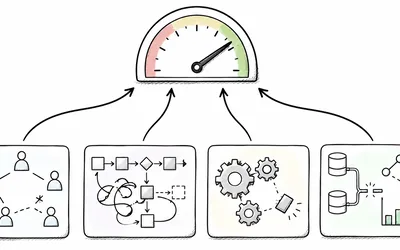
Martech benchmarks measure spend, tools, and utilization, but none measures whether your team can operate the stack. Here's what the numbers can't see.