Customer journey orchestration is the practice of designing, automating, and optimizing the sequence of interactions a customer has with a brand across channels and over time. Orchestration coordinates messaging, timing, and channel selection to guide customers through defined stages.
Customer journey orchestration is the practice of coordinating every interaction a customer has with your brand across channels, touchpoints, and time. Instead of running isolated campaigns on individual channels (an email nurture here, a retargeting ad there, an in-app message somewhere else), orchestration connects them into a coherent sequence that adapts based on what the customer does next.
The concept moves beyond linear campaign workflows. A traditional marketing automation sequence says “send email on day 1, follow up on day 3, alert sales on day 7.” Orchestration says “if the customer opened the email but did not click, try the same message in-app. If they visited the pricing page after the in-app message, suppress the day 3 email and trigger a sales alert now.”
Experience is cross-channel whether you manage it or not
Customers do not experience your marketing by channel. They experience it as a continuous stream of interactions with your brand, whether those interactions happen via email, web, app, ads, or sales conversations. When those interactions are coordinated, the experience feels relevant. When they contradict each other or repeat the same message across 4 channels simultaneously, the experience feels broken.
Orchestration also prevents the most common waste pattern in marketing: touching the same person too many times on too many channels with the same message. Frequency management across channels requires a system that sees all the touchpoints, not just the ones visible to a single platform.
Automation is not orchestration
The first mistake is calling campaign automation “orchestration.” If every customer gets the same sequence regardless of behavior, you have automated workflows, not orchestrated journeys. Orchestration requires real-time behavioral input and decision logic that adapts the path.
The second mistake is designing orchestration around the brand’s goals instead of the customer’s context. Orchestration that pushes customers toward conversion faster than they are ready creates friction. The customer’s behavior signals where they are in the journey. Orchestration should follow those signals, not override them.
Frequently Asked Questions
How is journey orchestration different from marketing automation?
Does journey orchestration require a CDP?
Go deeper
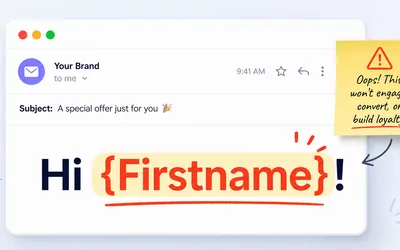
Why Personalization Fails: The Consumer Promise Was Always Wrong and Your Stack Made It Worse
Gartner research shows personalization harms 53% of customers. Cart abandonment hasn't budged in five years. 70% of CMOs admit they can't scale it. Here's what the data says about the consumer promise, the execution reality, and what would work instead.
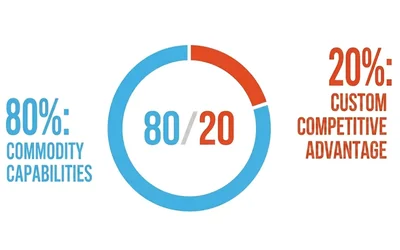
How the 80/20 Rule Shapes Martech Implementation Success
Most martech stacks deliver competitive value from just 20% of capabilities. Why implementation energy flows to the commodity 80% — and how to close the gap.