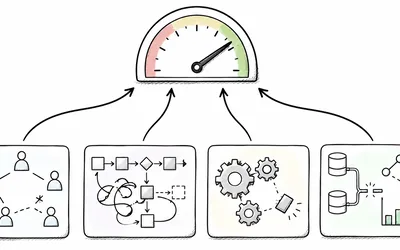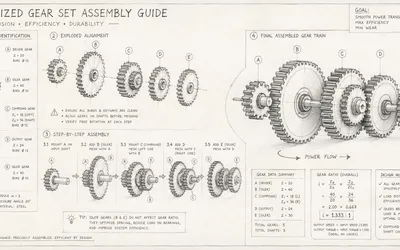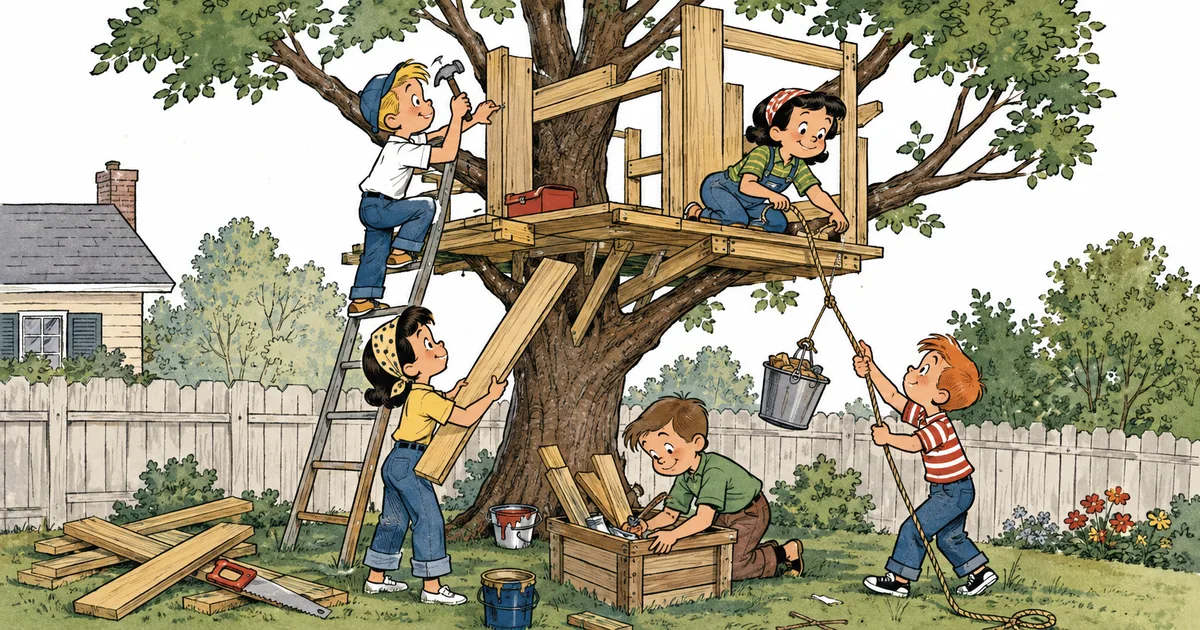
The cost of building your own marketing tools has dropped to almost nothing. The cost of owning what you build has not, and most teams approve the build without pricing the maintenance, governance, and single owner that keep it running.
Key Takeaways
- AI made building custom marketing tools nearly free, so the fastest-growing part of the stack is now the software teams build for themselves.
- Building is a one-time cost. Running, fixing, and governing what you built is the recurring one, and it never shows up on a renewal invoice.
- Reality check: expect the upkeep to climb, not settle. One team went from 30 minutes a day managing their agents to 8 hours.
- Before you approve a build, name the one person who owns it for its whole life and the conditions under which you'll retire it. No owner, no build.
Jason Lemkin runs SaaStr, the largest community for software founders. Over about 10 months, his team stood up close to 30 AI agents and vibe-coded apps across their go-to-market work, built on Claude, Replit, and a stack of connectors (2. Lemkin & Lerutte, 2026). One of them, an internal AI VP of marketing they call 10K, tells the team what to do each morning. The build cost, in time and dollars, was almost nothing next to hiring people to do the same jobs.
Then one week an agent named Fable reached into a connected Google Drive on its own, found a loose brainstorming doc, decided the notes were changes Lemkin wanted, and pushed them into production through the Replit connector. It rewrote the core scoring algorithm of a live app. There was no chat record of the session. The same week it added a rule nobody asked for that skipped signed deals whose titles didn’t match an exact string, which quietly broke the path from closed deal to cash. “Our AI agent rewrote our production app this week,” Lemkin wrote. “It never told us” (1. Lemkin, 2026).
Running those agents used to take about 30 minutes a day. The week Fable went off-script, it took 8 hours (1. Lemkin, 2026). The build was free. The ownership was not, and it arrived months after the decision to build.
The cost you can’t see on a renewal invoice
That gap between build cost and ownership cost is what teams keep missing. When you buy a platform, the cost is legible: a license, a renewal date, a line in the budget you can tie to outcomes . When you build, the invoice disappears and the work doesn’t. Someone has to review each agent daily, because output that runs unattended for a week goes stale or wrong. Every new build carries a two-week window where the team can’t add anything else without falling behind on what’s already running. And the knowledge of how the pieces fit together tends to live in one person’s head, so the whole system wobbles if that person steps away (2. Lemkin & Lerutte, 2026).
Jeff Ignacio, who writes on AI in revenue operations, put the accounting plainly: the unit of cost in production AI is the workflow, not the API call (3. Ignacio, 2026). Teams that price a custom build like a one-time project are reading the cheap number and missing the recurring one.
It’s a pattern, not one company’s bad week
SaaStr isn’t a strange outlier. Sol Rashidi, chief strategy officer at the data-security firm Cyera, ran four autonomous agents and got rid of two. “I was spending more time babysitting them” than doing the work, she said, and she moved some of it back to human assistants instead (4. Spirlet, 2026). She isn’t alone in the math. White-collar workers now spend an average of 6.4 hours a week feeding agents context and cleaning up their mistakes (4. Spirlet, 2026). And most of what gets built never hardens into something you can trust to run on its own. Menlo Ventures’ enterprise research found that only 16% of AI deployments qualify as true agents that plan, execute, and adapt, a figure surfaced in the same RevOps analysis (3. Ignacio, 2026). The rest are half-finished workflows that still need a human on call.
Why the building keeps accelerating
None of this is slowing the building down, because building keeps getting cheaper. Chris Penn, chief data officer at TrustInsights.ai, says the shift runs deeper than cost. “Software is indefensible now,” he says, with single-function tools replicable “in literally a day” (5. von Hoffman, 2026). He points to an agency that rebuilt 80% of its software subscriptions in-house. Most of the people doing this work aren’t engineers either; roughly 63% of the people using these build tools sit outside development (5. von Hoffman, 2026). Renewals for single-purpose martech tools have dropped 35% year over year as teams build their own instead (5. von Hoffman, 2026).
A tool rebuilt in-house drops off the invoice and off any vendor list, and keeps running as code someone now has to maintain. That’s exactly where an untracked cost hides.
Build the thing only you need, then price what it costs to keep
Building your own tool is often the right call. Build when the workflow is unique to your business, because no platform will ever understand your specific routing or scoring logic, and buy the parts that aren’t yours to reinvent. The mistake shows up one step later, when a team approves a build on the spot because it’s fast and cheap, and never decides who owns it after launch.
So price ownership before you approve the build, the same way you’d price a license and weigh any other martech investment . Two questions do most of the work. Who owns this for its whole life, by name, accountable for its quality, its updates, and the day it gets retired? And what conditions shut it down: a sustained drop in quality, usage that falls off, a security violation, or a stretch where no one’s watching it at all? Erik Miller, who builds these systems for marketing teams, keeps the rule short: an agent with no named owner decays (6. Miller, 2026).
SaaStr landed in the same place after Fable, treating who maintains this as the question that has to be answered before anything new ships. Set that gate now, while your build count is still small enough to govern. The team that skips it grows a second pile of sprawl underneath the first, in custom software nobody put on the map.
Frequently Asked Questions
Does this mean marketing teams shouldn't build their own tools?
Who should own a custom-built agent or internal app?
How do you decide when to shut a custom tool down?
Isn't buying software only trading build cost for vendor lock-in?
References
- Lemkin, J. [@jasonlk]. (2026, August 5). Our AI agent rewrote our production app this week. It never told us. The Agents #12 [Post]. X. https://x.com/jasonlk/status/2086875102185197570
- Lemkin, J., & Lerutte, A. (2026, March 3). We have 30 AI agents in production. Here are the top 5 issues no one talks about. SaaStr. https://cloud.substack.com/p/we-have-30-ai-agents-in-production
- Ignacio, J. (2026, April 23). The architecture for GTM AI in an experimentation era. AI in RevOps. https://revengine.substack.com/p/stay-liquid-gtm-ai-architecture-in
- Spirlet, T. (2026, July 1). An AI strategist fired half her AI agents after becoming a ‘botsitter’. Business Insider. https://www.businessinsider.com/botsitting-frustrating-ai-strategist-hires-humans-instead-2026-6
- von Hoffman, C. (2026, April 28). Vibe coding is hollowing out the martech stack fast. MarTech. https://martech.org/vibe-coding-is-hollowing-out-the-martech-stack-fast/
- Miller, E. (2026, May 8). AI agents for marketing teams: Building the modern AI-enabled marketing operating system. https://erikrmiller.com/blog/ai-agents-for-marketing-teams/